Showing posts with label Humanist. Show all posts

Face to Faith: Christians and Humanists in Conversation

***Please note the change of venue from the one published in our programme***
Wednesday 25th April 7.30pm
Elstead Hotel,  12-14 Knyveton Road, Bournemouth, BH1 3QP

With David Warden and John Macdiarmid

DW 2015John-macdiarmid crop

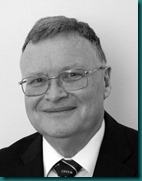
David Warden, chair of Dorset Humanists, will be talking with John Macdiamid, pastor of Poole Christian Fellowship about their different worldviews and how they came to hold diametrically opposed conclusions about God and the meaning of life.

John Macdiarmid was brought up a Catholic. He went through a brief phase of being an atheist and then converted to evangelical Christianity as a student. David Warden was an evangelical Christian in his teens and studied theology at university with a view to becoming a priest, but he graduated and left as a confirmed atheist. John and David are friends and have much in common, but on the biggest question of all they remain firmly in opposite camps. Tonight we bring them together with compère Dean Robertson to discuss their respective worldviews in front of a live audience.

Free entry (donations appreciated).     Everyone welcome!

Please indicate your interest in attending this event on Meetup.com and/or facebook as it helps raise our group’s profile on these sites (Meetup also offers you timely email reminders and an easy way to discover other interesting groups in your area). To help you find them, here are the direct links to our event listings on these sites: 

http://www.meetup.com/Dorset-Humanists/

https://www.facebook.com/groups/dorsethumanists/events/

Click here to view details of other forthcoming and recent events on this website.

***Please note the change of venue from the one published in our programme***

Religion in Schools?

Religion in Schools 22 February 2017Wednesday 22nd February 7.30pm
The Green House Hotel,  4 Grove Road, Bournemouth BH1 3AX

Whether religion has any place in schools is a controversial question engendering strong feelings both from those who see it as a good thing and those who do not.

For this evening’s event, we have assembled a panel of current and former school workers with a vested interest in this topic to present us with their differing views on the various forms of religious involvement in schools. Our panel members will be Hilary Bond who is a Schools and Children's worker for the Parish of Wareham, Cathy Silman who is a retired teacher and current member of Dorset Humanists Education Group, and Dave Pegg who is a Christian schools worker. Together they will discuss the controversial and contested domains of religious education, worship in schools, and faith schools.

Is there scope for Humanists, Christians, and people of other faiths to find common ground on the place of religion in our children’s education? Come along and join this lively discussion.

“Join us for a thought-provoking discussion on the place of religion in our children’s education”

Free entry (donations appreciated).     Everyone welcome!

(The Green House Hotel can also be accessed via its rear entrance in Gervis Road. The hotel has a small onsite car park, and roadside parking is also available in Gervis Road).

Please indicate your interest in attending this event on Meetup.com and/or facebook as it helps raise our group’s profile on these sites (Meetup also offers you timely email reminders and an easy way to discover other interesting groups in your area). To help you find them, here are the direct links to our event listings on these sites:

http://www.meetup.com/Dorset-Humanists/

https://www.facebook.com/groups/dorsethumanists/events/

You can also help us promote Dorset Humanists and this event by displaying an A4 poster. Download an A4 printable copy here, or email Dave at DHcensus(at)hotmail.co.uk for a PDF.

Click here to view details of other forthcoming and recent events on this website.

Women and Humanism

Women & Humanism 09 January 2016Saturday 9th January 2016 - 2.00pm 
Moordown Community Centre, Coronation Avenue, Moordown Bournemouth BH9 1TW

with Former Chair of the National Sex Education Forum Jo Adams

All of us deserve the opportunity to be educated, to work, to be healthy and to participate in all aspects of public life.

Yet throughout history, women have been denied many of these rights and religion has played a major part in this oppression and discrimination. So what role does Humanism have to play in advancing gender equality, and what part do women play in modern Humanism?

Jo Adams will examine these issues and discuss ways in which women can be equally represented in a truly egalitarian Humanist movement..

Jo Adams is a member of the Women's Equality Party, and was formerly chair of the National Sex Education Forum and an Adviser to the Department of Health on Sexual Health and Teenage Pregnancy. She is also the author of a number of books relating to self-esteem and positive sexual health.

Join us to hear a compelling case for actively supporting and promoting worldwide gender equality.

Free entry (donations appreciated).     Everyone welcome!

Please indicate your interest in attending this event on Meetup.com and/or facebook as it helps raise our group’s profile on these sites (Meetup also offers you timely email reminders and an easy way to discover other interesting groups in your area). To help you find them, here are the direct links to our event listings on these sites:

http://www.meetup.com/Dorset-Humanists/

https://www.facebook.com/groups/dorsethumanists/events/

You can also help us promote Dorset Humanists and this event by displaying an A4 poster. Download an A4 printable copy here, or email Dave at DHcensus(at)hotmail.co.uk for a PDF.

Click here to view details of other forthcoming and recent events on this website.

Effectively Advancing Equality and Human Rights

Advancing Equality & Human Rights 28 October 2015Wednesday 28th October 7.30pm
The Green House Hotel,  4 Grove Road, Bournemouth BH1 3AX

With Pavan Dhaliwal of the British Humanist Association

Humanists have always been at the forefront of promoting a rational, secular approach to ethical issues in public policy, and the British Humanist AssociationBritish Humanist Association (BHA) devotes much of its resources towards campaigning for equality and human rights. Pavan Dhaliwal will outline the BHA’s current campaigns on issues such as assisted dying, religious education, and pastoral care in hospitals, and explain how we can most effectively use our limited resources for maximum effect. One such method currently being explored is the use of ‘strategic litigation’ which can bring about significant changes in the law, legal practice and/or public awareness by taking carefully-selected test cases to court.

Pavan Dhaliwal is Director of Public Affairs and Campaigns at the British Humanist Association and is responsible for campaigns covering a wide range of issues including public services, equality law, ethical issues, religion and schools, and social cohesion. She has worked in high level advisory and Head of Policy and Public Affairs roles for the past seven years. She is an equalities and human rights expert with a special interest in youth, criminal justice and education policy

“Join us to discover how the British Humanist Association is working to advance equality and human rights”

Free entry (donations appreciated).     Everyone welcome!

(The Green House Hotel can also be accessed via its rear entrance in Gervis Road. The hotel has a small onsite car park, and roadside parking is also available in Gervis Road).

Please indicate your interest in attending this event on Meetup.com and/or facebook as it helps raise our group’s profile on these sites (Meetup also offers you timely email reminders and an easy way to discover other interesting groups in your area). To help you find them, here are the direct links to our event listings on these sites:

http://www.meetup.com/Dorset-Humanists/

https://www.facebook.com/groups/dorsethumanists/events/

You can also help us promote Dorset Humanists and this event by displaying an A4 poster. Download an A4 printable copy here, or email Dave at DHcensus(at)hotmail.co.uk for a PDF.

Click here to view details of other forthcoming and recent events on this website.

Humanists for a Better World: Global Problems – Why Bother?

Wednesday 22nd July 7.30pm
The Green House Hotel,  4 Grove Road, Bournemouth BH1 3AX

With ‘Humanists for a Better World’ co-founder Marilyn Mason

Humanists have always been concerned about global problems such as human rights abuses, poverty, wars, hunger, and exploitation of the poor, yet globally there remains much to be done, and despite public statements to the contrary, issues such as climate change and environmental sustainability remain low priorities for most UK politicians. Humanism is a worldview which inspires considered action, and Marilyn Mason will explain why she thinks humanists should get involved in changing things for the better, and how she co-founded Humanists for a Better World to encourage not just more discussion and information-sharing, but more collective humanist action too. Marilyn will be focussing on the positive actions we can take communally, politically and as individuals.

Marilyn Mason was the British Humanist Association’s first ever Education Officer. She co-founded Humanists for a Better World, represents the British Humanist Association in the Stop Climate Chaos coalition, and is on the steering group of Transition Town Kingston.

“Join us as we explore a range of ways in which we can individually and collectively help improve our world”

Free entry (donations appreciated).     Everyone welcome!

(The Green House Hotel can also be accessed via its rear entrance in Gervis Road. The hotel has a small onsite car park, and roadside parking is also available in Gervis Road).

Please indicate your interest in attending this event on Meetup.com and/or facebook as it helps raise our group’s profile on these sites (Meetup also offers you timely email reminders and an easy way to discover other interesting groups in your area). To help you find them, here are the direct links to our event listings on these sites:

http://www.meetup.com/Dorset-Humanists/

https://www.facebook.com/groups/dorsethumanists/events/

You can also help us promote Dorset Humanists and this event by displaying an A4 poster. Download an A4 printable copy here, or email Dave at DHcensus(at)hotmail.co.uk for a PDF.

Click here to view details of other forthcoming and recent events on this website.

Humanism in Ugandan Schools

Humanism in Ugandan SchoolsSaturday 13th December 2.00pm 
Moordown Community Centre, Coronation Avenue, Moordown Bournemouth BH9 1TW

A presentation by Steve & Hilary Hurd

A third of Uganda’s population live in severe poverty, belief in witchcraft, demonic possession and pseudoscience is widespread, and the country has been identified as the world’s most dangerous place to live if you are gay.

Against this backdrop of superstitious beliefs and religious bigotry, the Uganda Humanist Schools Trust was established to support three secondary schools offering liberal secular-humanist education in impoverished rural communities, providing otherwise-unattainable education for children growing up without electricity, sanitation, or running water, many of whom are orphans. The schools aim to provide an education that respects freedom of thought and expression, rational scientific enquiry, human rights, gender and racial equality, and that attains high levels of achievement and social responsibility.

Please come along to discover the remarkable story of these inspirational schools and their achievements.

Free entry (donations appreciated).     Everyone welcome!

Please indicate your interest in attending this event on Meetup.com and/or facebook as it helps raise our group’s profile on these sites (Meetup also offers you timely email reminders and an easy way to discover other interesting groups in your area). To help you find them, here are the direct links to our event listings on these sites:

http://www.meetup.com/Dorset-Humanists/

https://www.facebook.com/groups/dorsethumanists/events/

Another easy way you can help us promote Dorset Humanists and this event is by displaying an A4 poster. Download an A4 printable copy here, or email Dave at DHcensus(at)hotmail.co.uk for a PDF.

Click here to view details of other forthcoming and recent events on this website.

‘One Life’ Course: Exploring Humanism and Atheism

October/November 2014. All sessions: 7.30pm to 9:30pmThe Green House Hotel, 4 Grove Road, Bournemouth BH1 3AX

LogoBHA2012.1The ‘One Life’ Course: A six week introduction to Humanism and Atheism (Course Tutor: Chair of Dorset Humanists, David Warden)
This popular and enlightening course is intended for everybody who is interested in Humanism and wishes to discover more about its principles and the activities of Humanists. It's a great opportunity to explore life's big questions from a non-religious perspective, while meeting and interacting with interesting new people in a positive friendly environment.
During the course we’ll discover how Humanism provides a rational, non-religious way of approaching life’s ‘big questions’, and how it offers values that help us to live happy, worthwhile and fulfilled lives.
Session schedule:
   1. Humanist Beliefs and History: Tuesday October 7th 2014
   2. The God Debate: Monday October 13th 2014
   3. Secularism and Religious Privilege: Tuesday October 21st 2014
   4. Ethics & Morality without Religion: Tuesday Nov 4th 2014
   5. Prospects for Happiness: Tuesday November 11th 2014
   6. Possibilities for a Good Society Tuesday November 18th 2014
   (No meeting on 28th October due to half-term break).
There will be a small charge for this course to help cover venue hire. All sessions 7.30pm – 9.30pm at The Green House Hotel, Grove Road, Bournemouth BH1 3AX.
Total Course cost (The total course cost is the same regardless of how many sessions you choose to attend)
   · £15 for non-members, or £12 for members of Dorset Humanists.
   · Early booking discount: £2 off members’ and non-members’ prices if booked before 15th Sept.
   · Flat rate of £5 for students (whenever booked).
Please make cheques payable to ‘Dorset Humanists’, or contact us for BACS payment details.
Please book early to avoid disappointment due to a limited number of places

Some feedback from previous ‘One Life’ courses:
· “An amazing course – it’s been fantastic!”
· “Just what we need to introduce people to Humanism”
· “As a Christian I felt at ease and accepted by those present.”
· “My mind continues to buzz about many issues arising from the course”
clip_image002[2]Course Tutor: David Warden BA, MA, Chartered Member of the Chartered Institute of Personnel and Development, Chair of Dorset Humanists.
For further information, email David Warden at chairman@dorsethumanists.co.uk or phone 07910 886629, or talk to us at one of our meetings.
(The Green House Hotel can also be accessed via its rear entrance in Gervis Road. The hotel has a small onsite car park, and roadside parking is also available in Gervis Road).
Click here to view details of forthcoming and recent Dorset Humanists events on this website.

A Selection of Podcasts

Humanism related podcasts

Some members of the Dorset Humanists Facebook Group compiled a list of their favourite podcasts and we are sharing their choices here. Each of these podcasts have a different style so there should be at least one or two in the list (and hopefully many more!) that you will enjoy.

People who use iTunes will be able to download these fairly easily. For those who don't use iTunes, these podcasts can be listened to through an internet browser or on a smart phone with a podcast app like Stitcher or DoggCatcher.

If you know of any good podcasts that you feel would be of interest to other humanists please add your suggestions in the comments.

Humanism/Atheism

The Atheist Experience – Atheist Community of Austin

Description – The Atheist Experience is weekly cable access television show in Austin Texas geared at a non-atheist audience.
Website
iTunes
RSS URL

Reasonable Doubts

Description – Reasonable Doubts is an award winning radio show and podcast for people who won't "just take things on faith." RD's mission is to investigate the claims of religion from a fair-minded yet critical perspective. In addition to interviewing the top minds in skepticism, RD offers regular segments on religious apologetics, psychology of religion, biblical criticism, and mythology.

The Thinking Atheist

Description – Seth Andrews, a former Christian broadcaster and believer for 30 years, ultimately escaped the bonds of superstitious thinking to embrace the more satisfying explanations that science provides. A professional video producer and host of one of the most popular atheist communities on the internet, Seth Andrews brings a polished format, a relaxed environment and a rage-free challenge to the religious beliefs that defined his youth.

The Humanist Hour

Description - A monthly one-hour talk show produced by the American Humanist Association.

Humanist Thought of the Week

Description - Inspiration to live a better life. (each show about 1 minute long)
Website
iTunes
RSS URL

Rationalist Organisation

Description - from the producers of New Humanist magazine (UK). Every December, daily podcasts with humanist/atheist comedians or scientists. Other occasional podcasts throughout the year of a sceptical secular viewpoint.
Website

Science/Skepticism

Skeptics' Guide to the Universe

Description - The Skeptics Guide to the Universe is a weekly Science podcast talkshow discussing the latest news and topics from the world of the paranormal, fringe science, and controversial claims from a scientific point of view.
Website
iTunes
RSS URL

The Pod Delusion

Description – A weekly news magazine podcast about interesting things. From politics, to science to culture and philosophy, it’s commentary from a secular, rationist, sceptical, somewhat lefty-liberal, sort of perspective.
Website
iTunes
RSS URL


Skepticule

Description - Irregular audio utterances from a UK skeptic or three
Website
iTunes
RSS URL

Skeptics with a K

The podcast of the Merseyside Skeptics Society, recorded and edited at the region's internationally-renowned Summit Studios. Each episode features Mike, Marsh and Colin chatting about stuff that interests them, often with a skeptical angle.
Website

InKredulous

Description - InKredulous is the skeptical, satirical, comedy panel show from the Merseyside Skeptics Society. The smartest, funniest and fastest skeptics around are invited to take part… and decline.

Skeptoid

Description - A weekly science podcast dedicated to furthering knowledge by blasting away the widespread pseudosciences that infect popular culture, and replacing them with way cooler reality.

Each weekly episode focuses on a single phenomenon — an urban legend, a paranormal claim, alternative therapy, or something just plain stupid — that you've heard of, and that you probably believe in. Skeptoid attempts to expose the folly of belief in non-evidence based phenomena, and more importantly, explains the factual scientific reality.

From the sublime to the startling, no topic is sacred, politically incorrect though that may be.
Website

60-Second Science

Description - Tune in every weekday for quick reports and commentaries on the world of science-- it'll just take a minute.
Website

Dr Karl and the Naked Scientist

Description - Dr Chris Smith aka The Naked Scientist with the latest news from the world of science and Dr Karl answers listeners' science questions on Radio 5 live's Up All Night programme.
iTunes
RSS URL

Science Magazine Podcast

Description - Periodic audiocasts from Science Magazine, the world's leading journal of original scientific research, global news and commentary.
RSS URL

Rationally Speaking Podcast

Massimo Pigliucci and Julia Galef of New York City Skeptics explore the borderlands between reason and nonsense, likely and unlikely, science and pseudoscience.

Inside Science - BBC - Adam Rutherford

Covering everything from the humble test tube to the depths of space, Inside Science is your guide to how science is evolving, transforming our culture, and affecting our lives.

Numbers of Non-Religious & Religious in Dorset (by Age, Ethnic Group, Country Group & Occupation)

Census 2011: The 16th May 2013 release of census data drills down to numbers of religious & non-religious in local authority regions of Bournemouth, Poole and county of Dorset (comprising Christchurch, East Dorset, North Dorset, Purbeck, West Dorset, Weymouth and Portland) - see map left.

I have compiled the new religious data into four sections with  examples from the town I was born in, Bournemouth (click image for larger image). Each of my Excel summaries has details of the above 8 Local Authorities in Dorset County.

NB. Sections on National Identity by Religion and  Economic Activity by Religion are not included in my compilation.

1) DC2107EW - Age by Religion in Dorset County (source | download Excel summary by Chris Street)


Note: In Bournemouth, parents state that 29% Primary age children (age 5-9) and 30-36% of Secondary children (age 10-17) have no religion. 50% age 20-24 have no religion.

Census 2011: Was the 'What is your Religion?' question fatally flawed?

Was the 'What is your Religion?' question fatally flawed?
Yes! Say British Humanist Association.
No! Say Office of National Statistics.

Is 'What is your Religion?' a loaded question?

... the data on religion produced by the 2011 Census gives a misleading picture of the religiosity of the UK, despite the rise in the percentage of non-religious. This is because of the flawed nature of the Census question on religion. ‘What is your religion?’, the question which was used in England and Wales in the 2001 and 2011 Censuses, is a loaded question, because it assumes that the respondent has a religion. In addition, many respondents who answer this question by ticking a religion only do so because their family brought them up in that faith, not because they still believe in it or actively practice it. The data on religious belief in the Census should therefore be viewed as indicative of culture rather than of religion. 

The figures were probably also distorted by the fact that the question on religion appeared immediately after a series of questions on ethnicity, which may well have encouraged people to respond more on the basis of culture than actual beliefs or religious affiliation.

... Someone who loosely identifies themselves as Christian in a cultural sense might not necessarily agree with the idea of Christian organisations taking over public services in their area. Read more.

The British Social Attitudes, 2011 asked whether they regarded themselves as belonging to any particular religion, 44% of adults replied in the negative. This was a lower proportion than in 2010 (50%) but much higher than when the question had first been put in 1983 (31%).

However ONS argue (see below) that the word 'belonging' is also a loaded question. 'Belonging' implies a strong affiliation to a religion (ie signing up for a religion or going to church regularly).

Andrew Copson, CEO BHA called the Census 2011 figures 'astounding'. ‘This is a really significant cultural shift. In spite of a biased question that positively encourages religious responses, to see such an increase in the non-religious and such a decrease in those reporting themselves as Christian is astounding. Of course these figures still exaggerate the number of Christians overall – the number of believing, practicing Christians is much lower than this and the number of those leading their lives with no reference to religion much higher. Religious practice, identity, belonging and belief are all in decline in this country, and non-religious identities are on the rise. It is time that public policy caught up with this mass turning away from religious identities and stopped privileging religious bodies with ever increasing numbers of state-funded religious schools and other faith-based initiatives. They are decreasingly relevant to British life and identity and governments should catch up and accept that fact.’

The British Social Attitudes Survey 2010 

Religion - page 173 asked "Do you consider yourself as belonging to a particular religion"

One in three (31%) in 1983 did not belong to a religion, compared with one in two (50%) now.
The largest decline has been in affiliation with the Church of England, which has halved since
1983 (from 40% to 20%). This change – which is likely to continue – can be explained by generational replacement, with older, more religious, generations dying out and being replaced by less religious generations. There is little evidence that substantial numbers find religion as they get older. (source: BSAS 2010)

Why are we less religious than we used to be? 

BSAS 2010 says 'How can we explain this decline in religiosity? Here, we focus on the decline in religious affiliation, which we have seen is strongly influenced by being brought up in a religion, and links to levels of religious attendance. Does the decline in religious affiliation result from a lifecycle effect (with each individual generation’s attitudes following a particular pattern throughout their lifecycle), a period effect (with a particular event or way of thinking affecting all or some of society at a particular point in time) or a generation or cohort effect (with more religious generations dying and being replaced by less religious ones)? source: BSAS 2010, pg 181

To explore these possibilities, we grouped respondents into nine ‘generations’ and considered their levels of religious affiliation at four points in time. This analysis is presented in Table 12.7. source: BSAS 2010, pg 181


The first point to note is that there is no evidence of a lifecycle effect – that is, as people grow older they become more or less religious. Non-affiliation remains relatively stable as each generation ages; for example, 30 per cent of those born between 1936–1945 did not follow a religion in 1983 (when they were aged 38–47 years), compared with 31 per cent in 2010 (when they were 65–74 years). source: BSAS 2010, pg 181

Could the decline in religious affiliation be attributed to a period effect? At a time of plummeting trust in politicians and banks, might public cynicism have extended to religious bodies, perhaps spurred on by scandals within the church, such as the sex abuse scandal in the Roman Catholic Church in Ireland? There is some evidence of a decline in religious affiliation between 2000 and 2010, particularly for those generations currently aged in their mid-30s to mid-60s. This trend is likely to be very recent, as it has not been identified in previous work on this topic, and therefore merits further investigation. source: BSAS 2010, pg 181

However, by far the most marked differences occur between cohorts – indicating that the decline in religious affiliation in Britain has primarily been brought about by generational replacement. In 1983, for example, 55 per cent of those born between 1956 and 1965 (then aged 18–27) did not belong to a religion, compared with 12 per cent of those born before 1915 (then aged 68+). By 2010, 65 per cent of the youngest generation (born between 1986 and 1992 and then aged 18–24) did not belong to a religion, compared with 24 per cent of the oldest generation (born between 1926 and 1935 and then aged 75+6). The result of continual generational replacement is that, overall, the proportion of the population who does not belong to a religion continues to rise. source: BSAS 2010, pg 181

Graph by Chris Street

What do our findings mean for the future? We cannot, of course, rule out the possibility that a major event might affect people’s relationship with religion. But on the basis of our findings it seems likely that the ongoing decline in religious affiliation (and consequently religious attendance) will continue. This reflects the fact that each generation is less likely than its predecessor to be born into religious families, and that this lack of religiosity tends to remain with an individual as they get older. source: BSAS 2010, pg 181

Census 2001/2011 v British Social Attitudes - What is the difference in questions?

BSAS says in Note 1 'What is the difference between the proportions of the population identified as belonging to a religion by the 2001 census and British Social Attitudes can be partly explained by question wording: the census asks respondents “What is your religion?” – implying that the respondent has one – while the British Social Attitudes survey asks “Do you regard yourself as belonging to any particular religion?” The difference may also be due to the response options offered; with the census listing the major world religions, and British Social Attitudes listing specific denominations; respondents answering the former would be most likely to see this as a question concerned with ‘cultural classification’ rather than religion (Voas and Bruce, 2004). 


Finally, the context of the questions is significant, with the census question following one on ethnicity, arguably causing ‘contamination’ of responses (ibid.).' (source: BSAS 2010, note 1, pg 183)


NoelPlum99 

explains results of the Census 2011 and BSAS 2010 in his Youtube video (13m) which I recommend as a summary of Census 2011 and why the Census 2001 and 2011 question 'What is your religion', only looks at Religious Affiliation and NOT whether people believe in God.

I posted this in reply to his video:-

'@ 4.47
- Census 2011 'What is your religion?".What is it trying to find out? 59% Christians does NOT mean they believe in God!
@ 5.11
ONS say in their Youtube video 0-18secs "This is a short video looking at religion in England and Wales. Using these people we will look at the breakdown of Religious Affiliation; how we connect or identify with a religion, irrespective of actual practise or belief". On the ONS site they also say "Religion is a many sided concept and there are other aspects of religion such as religious belief, religious practice or belonging which are not covered in this analysis" (source: ONS)

Social connection is what interests them NOT whether you believe in god(s), or not.


@6.44
BNAS 2010 Religious Affiliation table 12.1 "Do you regard yourself as belonging to a particular religion? Result: 50% Irreligiosity.
@10.55s
Table 12.7 explains cohort reason. viz. as new generations come along, fewer of the cohort believe in God'

What options for the Religion question did ONS consider?

ONS published a 'Final recommended questions 2011 - Religion' a comprehensive 57 page pdf listed here.

ONS say there are a number of dimensions to the concept of religion, the key ones for survey and census questions being affiliation, practice and belief. Based on the evidence of a lengthy programme of research and consultation, ONS believes that the most appropriate question for the 2011 Census, that best meets user needs, is one that asks about religious affiliation.

Several different question wordings have been tested, including:
• What is your religion?
• What is your religion or belief?
• What is your religion, even if not currently practising?
• Do you regard yourself as belonging to a religion?
• Which of these best describes you?

Testing found that the question ‘what is your religion?’ best meets the requirement of collecting good quality data on religious affiliation within the space constraints of the census questionnaire. The question will also provide comparability between the 2001 and 2011 Censuses.

The question did not attempt to collect detailed information about the nature of their belief or the extent to which people practice their religion. Although questions on belief are asked in the British Social Attitudes Survey and the British Household Panel Survey, they are not seen as appropriate or acceptable for a census and nor would they meet the needs of most users of census data. (source: 'Final recommended questions 2011 - Religion', pg 9)

Do you regard yourself as belonging to a religion?

ONS chose not to use the BSAS question ('Final recommended questions 2011 - Religion', pg 25-27):- Do you regard yourself as belonging to a religion? The term ‘belonging’ is used in the literature to refer to both strong affiliation and regular churchgoing. It may be that this conflation occurs in the minds of respondents too. Differences in the proportion of religious affiliates between the census (‘what is your religion?’) and the BSA (‘Do you regard yourself as belonging to a particular religion?’) may be partly explained if people are more likely to understand the latter in terms of active belonging – that is, as requiring membership of a church or other practising religious group, reducing the number identifying as such (Voas and Bruce 2004).

What do BHA think about the 'What is your religion' question?

BHA - New survey evidence: census religion question ‘fatally flawed’.

click for large image


2011 Census Results: Dramatic Rise in Dorset’s Non-religious

Census01 According to results from the 2011 Census released today there was a big fall in those self-identifying as ‘Christian’ across England and Wales, and the proportion of people who reported they have no religion has now reached a quarter of the population.

Figures for our region are split by local authority and are as follows:
Bournemouth: 71% ‘Christian’ in 2001 dropped to 57% ‘Christian’ in 2011, and 18% ‘No Religion’ in 2001 rose to 30% No Religion’ in 2011.
Poole: 74% ‘Christian’ in 2001 dropped to 60% ‘Christian’ in 2011, and 16% ‘No Religion’ in 2001 rose to 30% No Religion’ in 2011.
Dorset (includes Christchurch, East Dorset, North Dorset, Purbeck, West Dorset, Weymouth & Portland): 78% ‘Christian’ in 2001 dropped to 65% ‘Christian’ in 2011, and 14% ‘No Religion’ in 2001 rose to 25% No Religion’ in 2011.
Detailed ONS 2011 Census religion statistics can be downloaded from: http://www.ons.gov.uk/ons/rel/census/2011-census/key-statistics-for-local-authorities-in-england-and-wales/rft-table-qs210ew.xls

It’s worth noting once again that the optional religion question in the 2011 Census was framed to identify religious affiliation which doesn’t necessarily indicate belief or practice. For comparison, the results of the 29th British Social Attitudes Survey (BSA), published in September 2012, found 45.7 per cent of respondents claimed not to belong to a religion.

The British Humanist Association’s CEO Andrew Copson had this to say about the results:
‘This is a really significant cultural shift. In spite of a biased question that positively encourages religious responses, to see such an increase in the non-religious and such a decrease in those reporting themselves as Christian is astounding. Of course these figures still exaggerate the number of Christians overall – the number of believing, practicing Christians is much lower than this and the number of those leading their lives with no reference to religion much higher.
 ‘Religious practice, identity, belonging and belief are all in decline in this country, and non-religious identities are on the rise. It is time that public policy caught up with this mass turning away from religious identities and stopped privileging religious bodies with ever increasing numbers of state-funded religious schools and other faith-based initiatives. They are decreasingly relevant to British life and identity and governments should catch up and accept that fact.’ (Read more here).

The ONS has a useful summary page on the religion results, including an animated video, here:
The 2011 Census results are summarised below (Other religions and ‘not stated’ not shown).
Area name
Local Authority
Area
Christian
Christian
No religion
No religion


Percentage
Percentage
Percentage
Percentage
2001 2011 2001 2011
ENGLAND AND WALES 71.75 59.3 14.81 25.1
ENGLAND 71.74 59.4 14.59 24.7
SOUTH WEST 73.99 60.4 16.75 29.3
Bournemouth UA 70.91 57.1 17.94 30.5
Poole UA 74.34 60.4 16.23 29.7
Dorset 77.88 65.3 13.74 25.2
Christchurch 79.06 67.1 13.18 23.6
East Dorset 79.90 66.8 12.61 24.2
North Dorset 77.75 66.5 13.61 23.8
Purbeck 78.36 65.0 13.81 25.9
West Dorset 77.55 65.3 13.61 25.0
Weymouth & Portland74.6761.015.8929.3